The Mojo That Never Was
Christopher Luxon promised New Zealand would find its mojo. Three years on, what story is his government actually telling?
In June 2023, Christopher Luxon told New Zealand it had lost its mojo — and that a National government would bring it back. It was the most emotionally resonant thing he ever said. It was also, as the data now shows, a promise his government has been quietly dismantling ever since.
The word mojo carries weight. Borrowed from African American hoodoo tradition, it originally described a charm — a source of invisible power and personal vitality. In popular culture it came to mean magnetism, confidence, the thing that makes you distinctively and irresistibly yourself. When Luxon reached for it, he was making a sophisticated emotional diagnosis: New Zealand had lost its self-belief, its swagger, its sense of being a small country that punched above its weight.
But what, exactly, was New Zealand's mojo? And is this government restoring it — or selling it off?
Source: SocialHerds dataset, 74,431 articles June 2023–June 2026
The chart tells a story in itself. The mojo narrative flared in a single intense burst — eight headlines in June 2023 alone, six of them directly connected to Luxon. By September 2023, it had faded almost entirely. The media moved on. And with it, the emotional promise went unexamined.
What NZ's Mojo Actually Was
New Zealand's international identity was built on a handful of genuine distinctions. In 1987, it became the first country in the world to legislate itself nuclear-free — a decision that cost it its ANZUS alliance with the United States and didn't matter at all, because it turned out New Zealanders cared more about their values than their alliance. The world noticed.
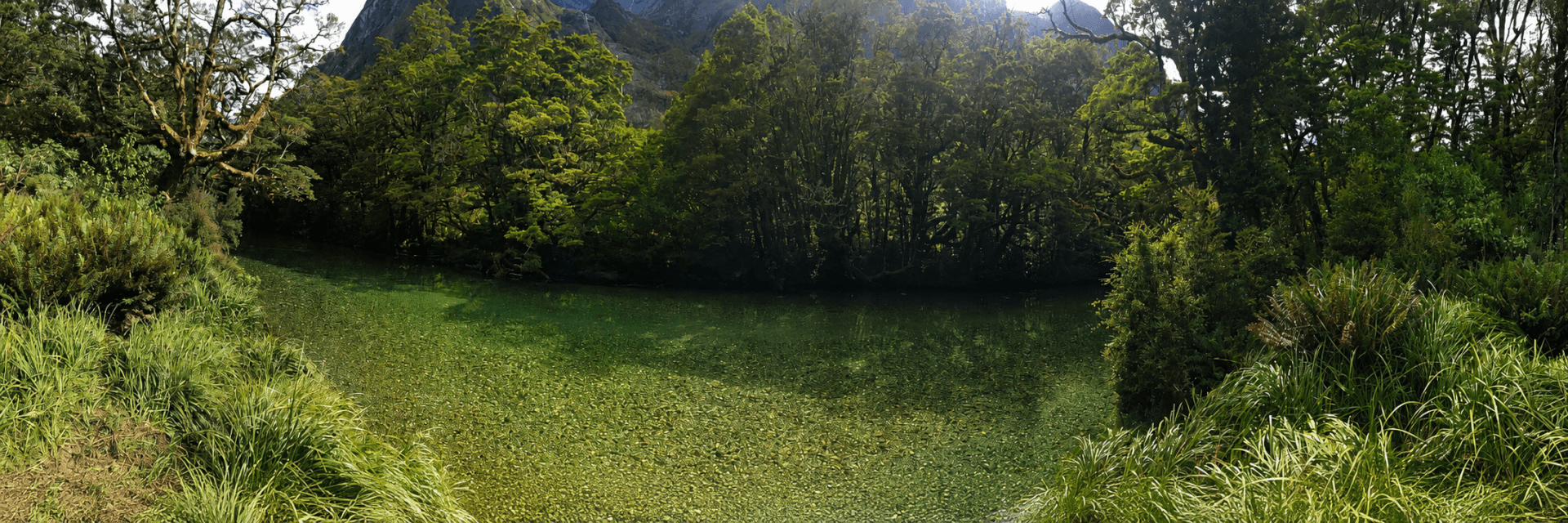
In 1999, Tourism New Zealand launched the 100% Pure campaign, crystallising a brand that had been building for decades: clean rivers, ancient forests, spectacular coastlines, a living laboratory of unique species found nowhere else on earth. The kiwi, the kakapo, the Hector's dolphin. Forests that predated human settlement by millions of years. That brand — clean, green, honest, independent — became the country's most valuable export signal. It underpinned premium prices for dairy, wine, and lamb. It drove visitor numbers. It was the story New Zealand told the world about itself.
That identity took decades to build. It rested, more than anything, on the country's relationship with its natural environment — not as an asset to be extracted, but as something the country was custodian of. The Department of Conservation was established in 1987, the same year as the nuclear-free legislation. It wasn't an accident. Both were expressions of the same national character.
What the Data Shows
Three years into the Luxon government, SocialHerds has tracked 790 government-linked conservation and environment headlines across our full dataset of 74,431 articles. These figures use the exact topic labels present in the dataset — Environment and Climate parent categories — counted separately as classified. The pattern is stark.
Source: SocialHerds dataset. Direction classified by keyword analysis of 790 government-linked Environment and Climate headlines, June 2023–June 2026.
The DOC funding story is particularly telling. It didn't arrive as one dramatic announcement — it came as a slow accumulation of small cuts, each individually manageable, collectively devastating.
Source: RNZ, Stuff, TVNZ, NZME as captured in the SocialHerds dataset
The pattern extends beyond DOC. The government's own director-general submitted evidence against a mine — and the submission was publicly "slammed as fanciful." Shane Jones announced plans to strip DOC of its concession powers. The Conservation Amendment Bill, introduced in June 2026, would enable the sale of public conservation land — drawing opposition from two-thirds of voters in polling, yet defended by Conservation Minister Tama Potaka with a request to "just trust us."
Climate coverage tells an even starker directional story. The negativity rate fell in 2024 before climbing sharply — reaching 27% in the first half of 2026, the highest point in the dataset. Across all of 2025, there was not a single positive government-linked climate headline.
The Economic Vision Gap
Set against this, what is the government's economic alternative? What is the story it's telling about where New Zealand's prosperity will come from?
Source: SocialHerds dataset. Sectors identified by keyword analysis of government-linked headlines across Economic, Housing, Transport, and related parent categories.
The picture that emerges is not a vision — it's a subtraction. The government's economic programme is dominated by removing obstacles: Fast Track consenting, red tape reduction, RMA reform. Housing and infrastructure dominate by volume, but these are problem-solving, not direction-setting. The fiscal story — managing debt and inflation — is maintenance.
What's notable by its absence: there is no technology strategy, no knowledge economy narrative, no renewable energy vision, no manufacturing sector story. Tourism — historically central to the clean green brand — appears in just 38 articles, and the headlines tell their own story: "Govt wants high-value tourists, but tourism funding set to be cut."
The one genuinely new idea is Nicola Willis's Social Investment framework — but that addresses welfare efficiency, not economic growth.
Mining and resource extraction and the Fast Track regime are the closest thing to a positive economic vision — an extractive model that would, if it proceeds, directly undermine the clean green brand that has underpinned premium export prices and tourist spending for thirty years.
The Storytelling Problem
There is a striking international parallel. Keir Starmer in the United Kingdom has been polling as one of the lowest-rated prime ministers in British history — despite a performance record widely seen as more competent than his predecessors Boris Johnson or Liz Truss. The reasons are multiple: the appointment of Peter Mandelson and his controversial associations, the politically damaging reversal on winter fuel payments, a series of early missteps that shook public trust before the government found its footing. But beneath those specific failures, a broader diagnosis keeps emerging from commentators across the political spectrum: Starmer struggles to make people feel anything. He has no animating story, no clear sense of where he is taking Britain and why. The policy record and the emotional register are disconnected.
Luxon has a version of the same problem, and the mojo episode crystallises it perfectly. He diagnosed New Zealand's loss of narrative with genuine accuracy. He reached for emotionally resonant language. And then he offered the absence of a story as the cure.
Mojo, by its nature, cannot be manufactured or promised. It is expressed — through what you actually stand for, through the choices you make when they're costly, through the story your actions tell even when no one is watching. New Zealand's original mojo — nuclear free, clean green, small country with big values — was built through exactly those kinds of costly choices.
What the Media Missed
This is, at its core, a media analysis story as much as a political one. The conservation land bill was covered primarily as a parliamentary drama — Potaka vs. Labour, the political spat, the minister's "trust us" line. The mining loophole in the bill was flagged by Forest & Bird and analysed by the Science Media Centre, but it reached few mainstream outlets with the depth it deserved.
The DOC cuts arrived piecemeal — 130 roles here, 71 there, the Chief Science Advisor gone quietly — each reported in isolation rather than as part of a pattern. No single headline said: "New Zealand is systematically defunding the institution that protects its most valuable national brand."
That is the story the data tells when you step back far enough to see it whole. And that, in the end, is what SocialHerds is here to do.
The question this government cannot answer: If New Zealand's mojo wasn't clean, green, and independent — what was it? And if it was those things, what is the plan to restore it while opening the conservation estate to mining and defunding the department that protects it?
Data note: Analysis draws on 74,431 headlines from the SocialHerds dataset, June 2023–June 2026, covering RNZ, NZME, Stuff, Newsroom, Spinoff and others. Direction (Negative/Neutral/Positive) and GovtLinked (Yes/No) columns added to the SocialHerds v7.4 classification system in June 2026. Direction classifications use keyword pattern analysis of headline text; positive classifications are conservative (aspirational language defaults to Neutral).