
Child Wellbeing

Growing up in New Zealand: do children have what they need to thrive?

  • A good childhood means having enough to eat, a secure home, people who care, opportunities to learn, and support when it is needed.
  • These foundations help children feel safe, belong, and look ahead with confidence.
    Many children and young people in New Zealand are doing well. Others face difficulties that affect several parts of their lives at once.

🍽️
1 in 5
Food insecurity
🩺
1 in 5
GP appointment delays
☀️
2 in 3
Positive wellbeing

Food shortages affected 21.4% of children aged 0–14, while 19.5% had GP appointment delays reported as a barrier. Among surveyed young people aged 13–19, 65.6% reported good or excellent wellbeing.

Sources: NZ Health Survey 2024/25; Youth Health and Wellbeing Survey 2025.

As with health outcomes, child hardship is not evenly distributed across New Zealand. Māori and Pacific children experience disproportionately high rates of material hardship, highlighting persistent inequalities in children’s living conditions and opportunities.

Material hardship measures the proportion of children living in households unable to afford a range of everyday essentials, including adequate food, heating, clothing and other basic needs.

31.0%
Pacific children
11.5%
European children
25.1%
Māori children
5.9%
Asian children

Source: Stats NZ, Child Poverty Statistics: Year ended June 2025, published February  2026.

Has life improved for New Zealand’s children since 2013?

Child poverty has fallen, but progress has gone backwards in recent years.
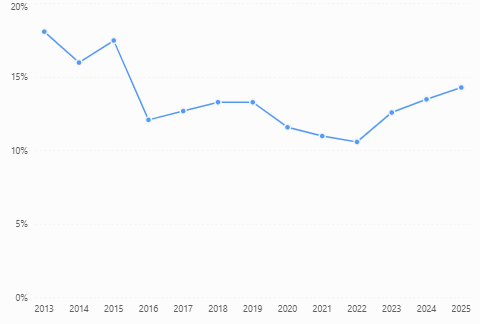
  • In 2013, 18.1% of children experienced material hardship. This fell to 10.6% in 2022, before rising to 14.3% in 2025 — reversing much of the earlier improvement.
Income poverty and material hardship are not the same.
  • A family’s income may improve while rising housing, food and energy costs leave them struggling to afford everyday essentials.
Have government policies made a difference?
  • Free GP visits offer an interesting example. In 2015, National extended free visits to under-13s, followed by Labour extending them to under-14s in 2018.
  • Between 2014/15 and 2018/19, the proportion of children aged 6–12 unable to visit a GP because of cost fell from 8.0% to 1.5%.
Access to healthcare improved, but that doesn’t necessarily mean families escaped poverty.
  • Policies can improve children’s lives without changing household poverty statistics.
How should we judge progress?
  • Government announcements tell us what was promised. Poverty statistics tell us only part of what changed.
  • The real test is whether children have enough to live on, can access essential services, and experience lasting improvements in health, education and everyday wellbeing.

Sources: Stats NZ Child Poverty Statistics; Ministry of Health, New Zealand Health Survey.

The question is not just what governments have done, but what has actually changed for children.

Child material hardship in New Zealand, 2013–2025

Percentage of children living in households experiencing material hardship

How badly New Zealand compares with 40 other countries

New Zealand ranks 32nd of 37 for child well-being

UNICEF Innocenti league table. New Zealand is last of 37 countries for children’s mental health and 33rd of 41 for physical health.

Better rank            Worse rank

RankCountryPhysical health
of 41
Mental health
of 37
Skills
of 41
1Netherlands5111
2Denmark147
3France2129
4Portugal10321
5Switzerland8156
6Ireland11241
7Lithuania131313
8Spain22517
9Romania24222
10Hungary29614
11Sweden141615
12Italy171025
13Slovenia16292
14Finland231716
15Croatia3474
16Austria20238
17Japan33212
18Latvia12929
19Slovakia251126
20Iceland62627
21Czechia42531
22Canada272220
23Greece26833
24United Kingdom212819
25Germany152134
26Malta191835
27Republic of Korea30343
28Bulgaria321432
29Estonia283024
30Poland183130
31Costa Rica372039
32New Zealand333723
33Colombia392737
34Uruguay353538
35Mexico411940
36TĂźrkiye363636
37Chile403341
–Australia31n/a*18
–Belgium7n/a*5
–Norway9n/a*10
–United States of America38n/a*28

* Australia, Belgium, Norway and the United States have no overall rank because mental health data were not available.

Colour shows rank relative to the number of countries ranked on each dimension. Source: UNICEF Innocenti, child well-being league table.

What shapes a child’s wellbeing?

Children’s needs are connected. A secure home, enough money for essentials, timely care, supportive relationships and opportunities to learn all contribute to a good childhood.

A secure home

A stable, warm and dry place to live, with enough room
to sleep, play and study.

Enough for everyday needs

Food, clothing, heating, transport and the ability to
take part in everyday childhood activities.

Health and early support

Healthcare, mental health care, disability support and
help for families before difficulties become crises.

Safety and belonging

Caring relationships, connection to culture and community,
and protection from violence, bullying and discrimination.

Learning and opportunity

Early learning, supportive schools, learning support
and opportunities to develop interests and aspirations.

What does this mean for election policies?

A policy may help with one need while leaving others unresolved. Look at how proposals work together:

  • who receives help
  • whether families can access it
  • how we will know if children’s lives have improved.

Government’s need to focus on what would make life better for children?

  • A secure home
  • People who care
  • Enough for everyday needs
  • Help when things get difficult

These foundations work together to give children a good start and opportunities to thrive.

  • New Zealand’s poor international results raise important questions. Housing and financial pressures matter, but they do not explain the whole picture. Relationships, safety, school experiences and access to support also need attention.

Explore each area below: select a heading to read the evidence and the questions to ask about election policies.

Enough to live on and a secure home

Children need food, warmth, suitable clothing and a stable place to live, with room to sleep, play and learn.

What the evidence tells us

  • In the 2024/25 New Zealand Health Survey, 21.4% of children aged 0–14 lived in households where food sometimes or
    often ran out.
  • Research by Jaimie Monk and Arthur Grimes identifies three ways housing can influence children’s lives:
  • stability, housing quality and affordable costs that leave more money for other needs.
  • Their study found that behavioural difficulties among children who started life in public housing declined towards their peers’ levels as they grew older. It does not establish that housing alone caused the improvement.

What the headlines add

Social Herds’ wider headline record includes questions about where children went after leaving emergency housing.

Leaving a motel is one  step; securing a suitable, lasting home is the outcome that matters.

Ask about the policy:
Will families have enough for essentials and a secure home?
Will their circumstances be followed after they leave a service?

Sources:

Support for parents and a good start

Supporting children includes supporting the people who care for them.

What the evidence tells us

In the 2024/25 Health Survey, most children had a parent or caregiver who reported having someone to turn to for emotional support with raising children. Around three quarters had a caregiver who reported coping well or very well with parenting demands.

Those strengths matter. So does making help available to families experiencing exhaustion, isolation, mental distress or difficulties caring for a child.

What the headlines add

The wider record includes concerns about maternal mental health, cuts to parent-support services and Plunket understaffing. These bring attention to whether practical help is available during the early years.

Ask about the policy:
– Can parents get practical and emotional support early?
– Who receives help if they do not qualify for employment-based entitlements?

Source: NZ Health Survey 2024/25: parenting findings

Someone to turn to when life gets difficult

Children and young people need trusted relationships and access to appropriate help when they are struggling.

What the evidence tells us

  • In the 2025 Youth Health and Wellbeing Survey, 65.6% of surveyed young people aged 13–19 reported good or excellent wellbeing.
  • However, 21.2% of those who answered enough screening questions met the threshold for high psychological distress.
  • This indicates a need for attention and support; it is not a clinical diagnosis.

What the headlines add

Coverage includes worsening access to specialist care, increasing demand among younger children, counselling services and research into the pressures behind distress. These stories help us look beyond a single national ranking.

Ask about the policy:
– Who can receive help
– How long do they wait
– What happens to children who do not meet service thresholds?

Source: Youth Health and Wellbeing Survey 2025 — results published March 2026.

Feeling safe, loved and listened to

A good childhood includes dependable care, affection and protection from violence, humiliation, sexual abuse and neglect.

What the evidence tells us

In the 2025 youth survey, 90% of surveyed young people said they lived with someone who cared for and loved them. Caring relationships are a strength to build on.

Serious harm also needs attention. A study published in 2018, following New Zealand children born in 1998 to age 17, found that 9.7% had a substantiated record of abuse or neglect. (Whilst this historical evidence about cases identified by services, rather than a current estimate of all abuse – it is also the most recent)

What the headlines add

The media report examines child protection, abuse in care and responses to institutional failures. These raise questions about prevention, safe placements, listening to children and following through on recommendations.

Ask about the policy:
– How will it prevent harm,
– Support safe parenting and ensure children are heard
– Who checks that concerns lead to effective action?

Sources: Youth Health and Wellbeing Survey 2025
NZ maltreatment study, 2018

Learning, friendships and belonging

Children need opportunities to learn, develop friendships and participate as themselves.

What the evidence tells us

Growing Up in New Zealand’s research at age 15 found that positive friendships and greater school satisfaction were associated with better mental wellbeing. Experiences of discrimination were associated with poorer wellbeing. Young people with disabilities reported poorer  outcomes on several measures, highlighting the importance of accessible support and inclusion.

What the headlines add

Stories about learning-support waiting lists, specialist shortages and bullying sit mainly within education coverage. They are also part of the child wellbeing picture. The record includes reporting about counselling helping students experiencing distress.

Ask about the policy:
– Will children receive learning support promptly
– Participate fully and be protected from bullying
– Will schools have the people and resources to deliver

Source: Growing Up in New Zealand: Now We Are Fifteen,
health and wellbeing snapshot

Growing up in a digital world

Understanding children’s online experiences is part of understanding their everyday lives.

What the evidence tells us

The 2025 youth survey includes young people’s own accounts of screen use and social media alongside home life, school and wellbeing. Time spent online alone does not establish whether it caused distress.

Evaluating a response means considering the content children encounter, how they interact online, and the relationships and activities available to them.

What the headlines add

The wider record contains substantial debate about age restrictions, online harms and alternatives to bans. It includes expert disagreement and young people’s views.

Ask about the policy:

  • – What evidence supports the proposal?
  • – How will its benefits and unintended effects be assessed?
  • – Have children and young people helped shape it?

Sources:
Youth Health and Wellbeing Survey 2025 
Mana Mokopuna: children’s voices

From understanding the issues to assessing the promises

A child may need help in several of these areas at once. The party comparison below asks whether proposals address those needs, reach the right families and provide a clear path to improvement.

Media observations draw on Social Herds’ report and a broader review of relevant headlines from 1 June 2023 to 29 September 2026. Headlines indicate what received attention; they do not establish the full content of articles or the causes of children’s outcomes.
Do party policies address what children need?

The test is whether policies reach the children who need them and improve their everyday lives.

This table compares selected published 2026 proposals. It does not cover every policy each party offers. The delivery questions are Social Herds’ assessment.

Sources checked: 16 October 2026. These are election proposals.

PartySelected proposalsNeeds addressedWhat needs to be demonstrated?
NationalExtend paid parental leave from 26 to 30 weeks by 2029,
with more flexibility for parents to share their
entitlement and take leave together.
Party source
Time with a new baby and financial support
for eligible working parents.
How will families outside eligibility receive help?
How will leave connect with postnatal care and
parental mental health support?
LabourReturn the existing school lunch programme to fresh,
locally made meals from Term 1 2028. Introduce public
transport fare caps from July 2027 and free referred
maternity scans from July 2028.
Party source
Nutritious food, transport costs and access
to maternity care.
How will meal quality and delivery be monitored?
What help reaches children outside participating
schools, and families waiting for the start dates?
Green PartyIncrease Best Start and extend it to every child under
three. Improve access to disability diagnosis and
learning support, develop the children’s workforce,
and strengthen children’s rights in decisions.
Party source
Early-years income, specialist support
and children’s participation.
What payment levels, funding and workforce will
deliver the changes? How quickly will children
waiting for assessment or support receive help?
ACTIntroduce a national Working with Children Card for
workers and volunteers in covered roles, with ongoing
Police-information checks, suspension powers
and child-protection training.
Party source
Protection from unsafe adults in organisations
working with children.
How will screening work alongside safe staffing,
supervision and complaints processes?
How will reduced harm be demonstrated?
New Zealand FirstIntroduce a tax-free Kiwi Kids Grant of $5,000 annually
for the first three years of each of a family’s first
three children. At least one parent must be a
New Zealand citizen. The grant would not be
income-tested.
Party source
The costs of raising young children
in eligible families.
How much would the grant reduce hardship?
What support reaches children excluded by the
citizenship, age or birth-order rules?
Opportunity PartyProposes long-term education reform, including improvements to early childhood education and a 10-year cross-party plan. Its wider Tax Reset policy proposes a Citizen’s Income and changes to housing taxation aimed at improving family financial security and reducing poverty. The impact on child material hardship remains to be established.


Party source

Consistent education policy, supported teachers
and quality early learning.
Which improvements would be funded first?
When would additional support arrive?
What could proceed without cross-party agreement?
Te Pāti MāoriInvest in whānau-led care, strengthen whānau authority
in decisions about mokopuna Māori, and make the state
accountable for harm through uplifts and placements.
Support Māori-led health, disability and education
services.
Party source
Safe care, cultural connection and support
for children and whānau together.
How would funding, responsibilities and independent
safeguards operate? How would children’s safety,
stability and access to support be measured?

The wider test:
Do the proposals work together for families facing several difficulties at once, and will help arrive before those difficulties become a crisis?

Analysis for previous elections

Currently NZ stats is completing /collating it’s Wellness data.  It is anticipated that this will be available in July 2019.

This has arrived click here to review the latest stats.  The next stats on child poverty will come out in Feb 2021.

2020

On the release of these stat 25 Feb 2020 Labour claimed that 18,000 children were ‘lifted out of poverty” – National claimed that 20,000 more children were in poverty.

  • The Spinoff’s analysis of these figures states that the measure of child poverty National chose to highlight was 267,900 kids in 2015. The same number today is 4,500 fewer.
  • Professor Grimes from Victoria University’s School of Government, when interviewed (on RNZ) stated that there is a strong link between children in poverty and housing costs and going forward steps need to be taken to reduce the housing costs.
1 in 5
Maori children 55k who live in households with less than 50% of the median household income before housing costs are deducted
1 in 9
80k Pākehā children living in households with less than 50% of the median household income before housing costs are deducted.

Incidence of Child poverty in NZ 2014

Between 205,000 and 260,000 children in New Zealand live in relative poverty

Ministry of Health - Child health status report 2012

The health of New Zealand Children 

Areas for improvement
  • The child obesity rate has increased since 2006/07.
  • Although most children were able to access health care when they needed to, one in five children had an unmet need for primary health care in the past year.
  • Children with poorer health and more unmet need for health care included: Māori, Pacific, and children living in more deprived areas.

Overview of key results

This section summarises key findings from the report, for the following topics:

Good news
  • Almost all children (98%) are in good health, according to their parents.
  • Fewer children are being given solid food before four months of age.
  • More children under 6 years are getting free GP visits.

Health behaviours

  • Improving trend in the age at which infants are given solid food
  • Most children eat breakfast at home every day
  • More than half of children watch 2+ hours of TV each day
  • Obesity is becoming more common in children

Health status and conditions

  • Asthma remains a common health condition in childhood
  • Diagnosed emotional and behavioural problems have increased

Use of primary health care

  • More children under six years have had a free GP visit

Unmet need for health care

  • Most children were able to access health care
  • Some children miss out on prescriptions due to cost

Oral health

  • Most children had a dental visit in the past 12 months

Interestingly the Ministry of Health report – Health of New Zealand Children 2011/12 does not mention the five health issues with a high prevalence in NZ (when compared to the OECD) and particularly prevalent  in areas of high deprivation.

These health issues are:

  1. Rheumatic Fever
  2. Serious Skin infections
  3. Whooping Cough
  4. Pneumonia
  5. Bronchiectasis

OECD Doing better for our children 2009

Doing better for our Children – OECD report 2009

  • This document showed that New Zealand is one of the few countries in the OECD whose policies are inadequate in a number of areas in protecting the wellbeing of children.
  • Twenty-four OECD countries have at least one dimension where a blue value (that is half a standard deviation higher than the OECD average)  is recorded.
  • New Zealand has  no dimensions half a standard deviation higher than the OECD average (neither do Poland, Turkey and the United States).
  • New Zealand is below the OECD by a half standard deviation (grey) on two dimensions: health and safety and risk behaviours.
  • This table was revised in 2013 but a lack of data on a number of indicators means that the following countries could not be included in the league table of child well-being: Australia, Bulgaria, Chile, Cyprus, Israel, Japan, Malta, Mexico, New Zealand, the Republic of Korea, and Turkey.
  • According to this document, in 2009 New Zealand’s suicide rate for young males was the highest in the OECD.

Political parties 2014 child poverty campaign #childpoverty

Information from the 2014 election

Health Status of children in NZ compared to other countries

These health issues are significantly more prevelant in NZ than other comparable countries

These health issues are also significantly more prevalent in areas of high deprivation

Child Wellbeing

Growing up in New Zealand: do children have what they need to thrive?
A good childhood means having enough to eat, a secure home, people who care, opportunities to learn, and support when it is needed.
These foundations help children feel safe, belong, and look ahead with confidence.
Many children and young people in New Zealand are doing well. Others face difficulties that affect several parts of their lives at once.

🍽️
1 in 5
Food insecurity

🩺
1 in 5
GP appointment delays

☀️
2 in 3
Positive wellbeing

Food shortages affected 21.4% of children aged 0–14, while 19.5% had GP appointment delays reported as a barrier. Among surveyed young people aged 13–19, 65.6% reported good or excellent wellbeing.

Sources: NZ Health Survey 2024/25; Youth Health and Wellbeing Survey 2025.

As with health outcomes, child hardship is not evenly distributed across New Zealand. Māori and Pacific children experience disproportionately high rates of material hardship, highlighting persistent inequalities in children’s living conditions and opportunities.

Material hardship measures the proportion of children living in households unable to afford a range of everyday essentials, including adequate food, heating, clothing and other basic needs.

31.0%
Pacific children

11.5%
European children

25.1%
Māori children

5.9%
Asian children

Source: Stats NZ, Child Poverty Statistics: Year ended June 2025, published February  2026.

View the parties’ election policies →

Has life improved for New Zealand’s children since 2013?
Child poverty has fallen, but progress has gone backwards in recent years.
In 2013, 18.1% of children experienced material hardship. This fell to 10.6% in 2022, before rising to 14.3% in 2025 — reversing much of the earlier improvement.
Income poverty and material hardship are not the same.
A family’s income may improve while rising housing, food and energy costs leave them struggling to afford everyday essentials.
Have government policies made a difference?
Free GP visits offer an interesting example. In 2015, National extended free visits to under-13s, followed by Labour extending them to under-14s in 2018.
Between 2014/15 and 2018/19, the proportion of children aged 6–12 unable to visit a GP because of cost fell from 8.0% to 1.5%.
Access to healthcare improved, but that doesn’t necessarily mean families escaped poverty.
Policies can improve children’s lives without changing household poverty statistics.
How should we judge progress?
Government announcements tell us what was promised. Poverty statistics tell us only part of what changed.
The real test is whether children have enough to live on, can access essential services, and experience lasting improvements in health, education and everyday wellbeing.

Sources: Stats NZ Child Poverty Statistics; Ministry of Health, New Zealand Health Survey.

The question is not just what governments have done, but what has actually changed for children.

Child material hardship in New Zealand, 2013–2025

Percentage of children living in households experiencing material hardship

How badly New Zealand compares with 40 other countries

New Zealand ranks 32nd of 37 for child well-being

UNICEF Innocenti league table. New Zealand is last of 37 countries for children’s mental health and 33rd of 41 for physical health.

Better rank            Worse rank

Rank Country Physical health
of 41 Mental health
of 37 Skills
of 41
1 Netherlands 5 1 11
2 Denmark 1 4 7
3 France 2 12 9
4 Portugal 10 3 21
5 Switzerland 8 15 6
6 Ireland 11 24 1
7 Lithuania 13 13 13
8 Spain 22 5 17
9 Romania 24 2 22
10 Hungary 29 6 14
11 Sweden 14 16 15
12 Italy 17 10 25
13 Slovenia 16 29 2
14 Finland 23 17 16
15 Croatia 34 7 4
16 Austria 20 23 8
17 Japan 3 32 12
18 Latvia 12 9 29
19 Slovakia 25 11 26
20 Iceland 6 26 27
21 Czechia 4 25 31
22 Canada 27 22 20
23 Greece 26 8 33
24 United Kingdom 21 28 19
25 Germany 15 21 34
26 Malta 19 18 35
27 Republic of Korea 30 34 3
28 Bulgaria 32 14 32
29 Estonia 28 30 24
30 Poland 18 31 30
31 Costa Rica 37 20 39
32 New Zealand 33 37 23
33 Colombia 39 27 37
34 Uruguay 35 35 38
35 Mexico 41 19 40
36 TĂźrkiye 36 36 36
37 Chile 40 33 41
– Australia 31 n/a* 18
– Belgium 7 n/a* 5
– Norway 9 n/a* 10
– United States of America 38 n/a* 28

* Australia, Belgium, Norway and the United States have no overall rank because mental health data were not available.

Colour shows rank relative to the number of countries ranked on each dimension. Source: UNICEF Innocenti, child well-being league table.

What shapes a child’s wellbeing?

Children’s needs are connected. A secure home, enough money for essentials, timely care, supportive relationships and opportunities to learn all contribute to a good childhood.

A secure home

A stable, warm and dry place to live, with enough room
to sleep, play and study.

Enough for everyday needs

Food, clothing, heating, transport and the ability to
take part in everyday childhood activities.

Health and early support

Healthcare, mental health care, disability support and
help for families before difficulties become crises.

Safety and belonging

Caring relationships, connection to culture and community,
and protection from violence, bullying and discrimination.

Learning and opportunity

Early learning, supportive schools, learning support
and opportunities to develop interests and aspirations.

What does this mean for election policies?

A policy may help with one need while leaving others unresolved. Look at how proposals work together:

who receives help
whether families can access it
how we will know if children’s lives have improved.

Government’s need to focus on what would make life better for children?
A secure home
People who care
Enough for everyday needs
Help when things get difficult

These foundations work together to give children a good start and opportunities to thrive.

New Zealand’s poor international results raise important questions. Housing and financial pressures matter, but they do not explain the whole picture. Relationships, safety, school experiences and access to support also need attention.

Explore each area below: select a heading to read the evidence and the questions to ask about election policies.

Enough to live on and a secure home

Children need food, warmth, suitable clothing and a stable place to live, with room to sleep, play and learn.

What the evidence tells us
In the 2024/25 New Zealand Health Survey, 21.4% of children aged 0–14 lived in households where food sometimes or
often ran out.
Research by Jaimie Monk and Arthur Grimes identifies three ways housing can influence children’s lives:
stability, housing quality and affordable costs that leave more money for other needs.
Their study found that behavioural difficulties among children who started life in public housing declined towards their peers’ levels as they grew older. It does not establish that housing alone caused the improvement.
What the headlines add

Social Herds’ wider headline record includes questions about where children went after leaving emergency housing.

Leaving a motel is one  step; securing a suitable, lasting home is the outcome that matters.

Ask about the policy:
Will families have enough for essentials and a secure home?
Will their circumstances be followed after they leave a service?

Sources:

NZ Health Survey 2024/25
Monk and Grimes, 2025

Support for parents and a good start

Supporting children includes supporting the people who care for them.

What the evidence tells us

In the 2024/25 Health Survey, most children had a parent or caregiver who reported having someone to turn to for emotional support with raising children. Around three quarters had a caregiver who reported coping well or very well with parenting demands.

Those strengths matter. So does making help available to families experiencing exhaustion, isolation, mental distress or difficulties caring for a child.

What the headlines add

The wider record includes concerns about maternal mental health, cuts to parent-support services and Plunket understaffing. These bring attention to whether practical help is available during the early years.

Ask about the policy:
– Can parents get practical and emotional support early?
– Who receives help if they do not qualify for employment-based entitlements?

Source: NZ Health Survey 2024/25: parenting findings

Someone to turn to when life gets difficult

Children and young people need trusted relationships and access to appropriate help when they are struggling.

What the evidence tells us
In the 2025 Youth Health and Wellbeing Survey, 65.6% of surveyed young people aged 13–19 reported good or excellent wellbeing.
However, 21.2% of those who answered enough screening questions met the threshold for high psychological distress.
This indicates a need for attention and support; it is not a clinical diagnosis.
What the headlines add

Coverage includes worsening access to specialist care, increasing demand among younger children, counselling services and research into the pressures behind distress. These stories help us look beyond a single national ranking.

Ask about the policy:
– Who can receive help
– How long do they wait
– What happens to children who do not meet service thresholds?

Source: Youth Health and Wellbeing Survey 2025 — results published March 2026.

Feeling safe, loved and listened to

A good childhood includes dependable care, affection and protection from violence, humiliation, sexual abuse and neglect.

What the evidence tells us

In the 2025 youth survey, 90% of surveyed young people said they lived with someone who cared for and loved them. Caring relationships are a strength to build on.

Serious harm also needs attention. A study published in 2018, following New Zealand children born in 1998 to age 17, found that 9.7% had a substantiated record of abuse or neglect. (Whilst this historical evidence about cases identified by services, rather than a current estimate of all abuse – it is also the most recent)

What the headlines add

The media report examines child protection, abuse in care and responses to institutional failures. These raise questions about prevention, safe placements, listening to children and following through on recommendations.

Ask about the policy:
– How will it prevent harm,
– Support safe parenting and ensure children are heard
– Who checks that concerns lead to effective action?

Sources: Youth Health and Wellbeing Survey 2025
NZ maltreatment study, 2018

Learning, friendships and belonging

Children need opportunities to learn, develop friendships and participate as themselves.

What the evidence tells us

Growing Up in New Zealand’s research at age 15 found that positive friendships and greater school satisfaction were associated with better mental wellbeing. Experiences of discrimination were associated with poorer wellbeing. Young people with disabilities reported poorer  outcomes on several measures, highlighting the importance of accessible support and inclusion.

What the headlines add

Stories about learning-support waiting lists, specialist shortages and bullying sit mainly within education coverage. They are also part of the child wellbeing picture. The record includes reporting about counselling helping students experiencing distress.

Ask about the policy:
– Will children receive learning support promptly
– Participate fully and be protected from bullying
– Will schools have the people and resources to deliver

Source: Growing Up in New Zealand: Now We Are Fifteen,
health and wellbeing snapshot

Growing up in a digital world

Understanding children’s online experiences is part of understanding their everyday lives.

What the evidence tells us

The 2025 youth survey includes young people’s own accounts of screen use and social media alongside home life, school and wellbeing. Time spent online alone does not establish whether it caused distress.

Evaluating a response means considering the content children encounter, how they interact online, and the relationships and activities available to them.

What the headlines add

The wider record contains substantial debate about age restrictions, online harms and alternatives to bans. It includes expert disagreement and young people’s views.

Ask about the policy:

– What evidence supports the proposal?
– How will its benefits and unintended effects be assessed?
– Have children and young people helped shape it?

Sources:
Youth Health and Wellbeing Survey 2025
Mana Mokopuna: children’s voices

From understanding the issues to assessing the promises

A child may need help in several of these areas at once. The party comparison below asks whether proposals address those needs, reach the right families and provide a clear path to improvement.

Media observations draw on Social Herds’ report and a broader review of relevant headlines from 1 June 2023 to 29 September 2026. Headlines indicate what received attention; they do not establish the full content of articles or the causes of children’s outcomes.

Do party policies address what children need?

The test is whether policies reach the children who need them and improve their everyday lives.

This table compares selected published 2026 proposals. It does not cover every policy each party offers. The delivery questions are Social Herds’ assessment.

Sources checked: 16 October 2026. These are election proposals.

Party Selected proposals Needs addressed What needs to be demonstrated?
National Extend paid parental leave from 26 to 30 weeks by 2029,
with more flexibility for parents to share their
entitlement and take leave together.
Party source
Time with a new baby and financial support
for eligible working parents. How will families outside eligibility receive help?
How will leave connect with postnatal care and
parental mental health support?
Labour Return the existing school lunch programme to fresh,
locally made meals from Term 1 2028. Introduce public
transport fare caps from July 2027 and free referred
maternity scans from July 2028.
Party source
Nutritious food, transport costs and access
to maternity care. How will meal quality and delivery be monitored?
What help reaches children outside participating
schools, and families waiting for the start dates?
Green Party Increase Best Start and extend it to every child under
three. Improve access to disability diagnosis and
learning support, develop the children’s workforce,
and strengthen children’s rights in decisions.
Party source
Early-years income, specialist support
and children’s participation. What payment levels, funding and workforce will
deliver the changes? How quickly will children
waiting for assessment or support receive help?
ACT Introduce a national Working with Children Card for
workers and volunteers in covered roles, with ongoing
Police-information checks, suspension powers
and child-protection training.
Party source
Protection from unsafe adults in organisations
working with children. How will screening work alongside safe staffing,
supervision and complaints processes?
How will reduced harm be demonstrated?
New Zealand First Introduce a tax-free Kiwi Kids Grant of $5,000 annually
for the first three years of each of a family’s first
three children. At least one parent must be a
New Zealand citizen. The grant would not be
income-tested.
Party source
The costs of raising young children
in eligible families. How much would the grant reduce hardship?
What support reaches children excluded by the
citizenship, age or birth-order rules?
Opportunity Party

Proposes long-term education reform, including improvements to early childhood education and a 10-year cross-party plan. Its wider Tax Reset policy proposes a Citizen’s Income and changes to housing taxation aimed at improving family financial security and reducing poverty. The impact on child material hardship remains to be established.

Party source

Consistent education policy, supported teachers
and quality early learning. Which improvements would be funded first?
When would additional support arrive?
What could proceed without cross-party agreement?
Te Pāti Māori Invest in whānau-led care, strengthen whānau authority
in decisions about mokopuna Māori, and make the state
accountable for harm through uplifts and placements.
Support Māori-led health, disability and education
services.
Party source
Safe care, cultural connection and support
for children and whānau together. How would funding, responsibilities and independent
safeguards operate? How would children’s safety,
stability and access to support be measured?

The wider test:
Do the proposals work together for families facing several difficulties at once, and will help arrive before those difficulties become a crisis?

Analysis for previous elections

Currently NZ stats is completing /collating it’s Wellness data.  It is anticipated that this will be available in July 2019.

This has arrived click here to review the latest stats.  The next stats on child poverty will come out in Feb 2021.

2020

On the release of these stat 25 Feb 2020 Labour claimed that 18,000 children were ‘lifted out of poverty” – National claimed that 20,000 more children were in poverty.

The Spinoff’s analysis of these figures states that the measure of child poverty National chose to highlight was 267,900 kids in 2015. The same number today is 4,500 fewer.
Professor Grimes from Victoria University’s School of Government, when interviewed (on RNZ) stated that there is a strong link between children in poverty and housing costs and going forward steps need to be taken to reduce the housing costs.

1 in 5
Maori children 55k who live in households with less than 50% of the median household income before housing costs are deducted
1 in 9
80k Pākehā children living in households with less than 50% of the median household income before housing costs are deducted.

Incidence of Child poverty in NZ 2014

Between 205,000 and 260,000 children in New Zealand live in relative poverty

Ministry of Health - Child health status report 2012

The health of New Zealand Children

Areas for improvement
The child obesity rate has increased since 2006/07.
Although most children were able to access health care when they needed to, one in five children had an unmet need for primary health care in the past year.
Children with poorer health and more unmet need for health care included: Māori, Pacific, and children living in more deprived areas.

Overview of key results

This section summarises key findings from the report, for the following topics:

health behaviours and risk factors
health status and conditions
use of primary health care
unmet need for health care
oral health.
Good news
Almost all children (98%) are in good health, according to their parents.
Fewer children are being given solid food before four months of age.
More children under 6 years are getting free GP visits.

Health behaviours

Improving trend in the age at which infants are given solid food
Most children eat breakfast at home every day
More than half of children watch 2+ hours of TV each day
Obesity is becoming more common in children

Health status and conditions

Asthma remains a common health condition in childhood
Diagnosed emotional and behavioural problems have increased

Use of primary health care

More children under six years have had a free GP visit

Unmet need for health care

Most children were able to access health care
Some children miss out on prescriptions due to cost

Oral health

Most children had a dental visit in the past 12 months

Interestingly the Ministry of Health report – Health of New Zealand Children 2011/12 does not mention the five health issues with a high prevalence in NZ (when compared to the OECD) and particularly prevalent  in areas of high deprivation.

These health issues are:

Rheumatic Fever
Serious Skin infections
Whooping Cough
Pneumonia
Bronchiectasis

OECD Doing better for our children 2009

Doing better for our Children – OECD report 2009

This document showed that New Zealand is one of the few countries in the OECD whose policies are inadequate in a number of areas in protecting the wellbeing of children.
Twenty-four OECD countries have at least one dimension where a blue value (that is half a standard deviation higher than the OECD average)  is recorded.
New Zealand has  no dimensions half a standard deviation higher than the OECD average (neither do Poland, Turkey and the United States).
New Zealand is below the OECD by a half standard deviation (grey) on two dimensions: health and safety and risk behaviours.
This table was revised in 2013 but a lack of data on a number of indicators means that the following countries could not be included in the league table of child well-being: Australia, Bulgaria, Chile, Cyprus, Israel, Japan, Malta, Mexico, New Zealand, the Republic of Korea, and Turkey.

According to this document, in 2009 New Zealand’s suicide rate for young males was the highest in the OECD.

Political parties 2014 child poverty campaign #childpoverty

Information from the 2014 election

Health Status of children in NZ compared to other countries

These health issues are significantly more prevelant in NZ than other comparable countries

These health issues are also significantly more prevalent in areas of high deprivation