

Greenhouse Gas Emissions
Climate change is primarily caused by the accumulation of Greenhouse Gases (GHGs) in the atmosphere due to human activities. GHGs absorb heat from the Earth’s surface, warming the atmosphere. Different GHGs remain in the atmosphere for different amounts of time, ranging from a few years to thousands of years.
Climate change: what are voters being asked to decide?
Climate change reaches New Zealand households through many routes: fuel and power prices, rates bills, insurance premiums, damaged roads, farm losses and the cost of rebuilding after storms. It is also a set of choices about how fast to cut emissions, who pays, and who decides.
Those choices are connected. Reducing emissions, preparing for climate effects, coping with extreme weather and paying for recovery all draw on the same national budget, the same household incomes and the same councils. Social Herds’ review of New Zealand political media from June 2023 to July 2026 found that the media reported each part of this story, but rarely joined them up. The cost of acting was usually clear; the cost of not acting, and who would carry it, was much less often explained.
This page brings the parts together. It sets out what is working, what needs to improve and how we know, then compares what each of the seven parties proposes. The test for every policy is the same: compared with what, and who carries the cost if the action is not taken?
What is working
Gross emissions are falling, slowly
New Zealand’s gross emissions peaked at 85.6 million tonnes in 2006 and were 75.8 million tonnes in 2024. From 2019 they fell about 2.3% a year. The fall stalled in 2024, when a dry year meant more coal-fired electricity, but provisional figures show a further 2.3% fall in 2025.
Electricity is mostly renewable
Renewables supplied 88.5% of electricity in 2025, up from 85.5% in 2024, and 47.7% of all primary energy. Dry years still push generation back towards coal and gas, as 2024 showed.
The first emissions budget is likely to be met
The Climate Change Commission expects the first budget (2022–2025) to be met with a buffer of 7.7 million tonnes. It also points to progress in industry, including the NZ Steel electric arc furnace, and to falling battery costs, down 75% globally since 2015, which make electric vehicles and home solar cheaper.
What needs to improve, and how we know
1. Later targets are off track
The Commission’s July 2026 report finds the second budget (2026–2030) is still projected to be met, but more than half the planned reductions, 12.4 million tonnes, are at significant risk. Current policies are not enough for the third budget (2031–2035) or the 2050 target. The 2030 methane target of a 10% cut is projected to reach only 7.9%. Emissions would need to fall at more than twice the current rate.
2. Too much depends on planting trees
Net emissions fell 2.0% in 2024, mainly because of forestry rather than cuts at the source. Forestry is expected to deliver 49.3% of the reductions in the third budget. The Commission warns that relying on one sector makes the budget more vulnerable.
3. The carbon market has stalled
The Emissions Trading Scheme auctions in March, June and September 2026 received no bids, leaving 10.4 million units unsold by September. The Commission says that, in its current form, the scheme will be unable to drive further reductions from around 2034.
4. An unfunded international bill
Treasury estimates New Zealand is 84–96 million tonnes short of its 2030 Paris target, and that buying overseas credits to cover the gap could cost $4.4–5 billion. The Prime Minister has said the Government will not send billions offshore. How the gap will be closed is unresolved.
5. We pay to recover, not to prepare
Damaging storms have gone from about once a month 15 years ago to about once a week. Around $235 billion of buildings are exposed to inland flooding. Yet 97% of government spending on natural hazards goes on response and recovery, and only 3% on resilience. The 2023 Auckland floods and Cyclone Gabrielle alone produced an estimated $3.18 billion in insurance claims.
Reading the trend, not the year. One year’s emissions figure can mislead. Gross emissions rose slightly in 2024 because of a dry year, after five years of decline, and fell again in 2025. The more important question is whether the rate of decline is fast enough for the later budgets. The Commission’s answer is no: it would need to more than double.
Explore the issues
Emissions and targets: is there a credible pathway?
The problem
New Zealand has several emissions tools: the Emissions Trading Scheme (ETS), domestic emissions budgets, a separate methane target and its Paris Agreement commitment. They are meant to work as one chain. Domestic cuts determine whether the Paris target is met; a shortfall creates pressure to buy overseas credits; and that becomes a cost to taxpayers.
Agriculture produces 53% of gross emissions and energy 38%. Methane makes up 48% of the total. In December 2025 the Government lowered the 2050 methane target from a 24–47% reduction to 14–24% (below 2017 levels), against the Commission’s advice, and ruled out pricing farm emissions.
What the media showed, and what was missing
The ETS was highly visible in media coverage, mostly through failed auctions, revenue gaps, court decisions and arguments over forestry and farming. That scrutiny is necessary. But the parts of the chain were usually reported as separate disputes. Readers rarely saw domestic emissions, the Paris shortfall and the potential bill to taxpayers set out together, or how much of the pathway relies on genuine cuts rather than tree planting.
Questions to ask
- How will the 2030 Paris shortfall be closed, and who pays if it is not?
- What share of the plan relies on forestry rather than gross reductions?
- What will make the carbon market work again?
- How will the methane target be met without, or with, a price on farm emissions?
Evidence: Greenhouse Gas Inventory 1990–2024 · Commission: 2026 emissions monitoring report · ETS auction results · Treasury estimate (Carbon News) · Methane target change
Adaptation: who pays to protect homes and infrastructure?
The problem
Some climate damage is already locked in. Councils must map hazards, protect infrastructure and plan with communities, sometimes including moving people away from repeatedly flooded areas. Insurers are pricing rising risk and may withdraw cover in some places. Each of these costs has to be carried by someone: ratepayers, homeowners, insurers or taxpayers.
The National Adaptation Framework, released in October 2025, sets out roles: central government sets the rules, councils lead locally and property owners manage their own risk. It proposes legislation requiring councils to prepare adaptation plans, a National Flood Map by 2027, and a development levy so developers contribute to infrastructure costs. It does not settle how to fund protection for existing exposed communities, or the future of buyouts after disasters.
The Commission’s 2026 risk assessment identifies pressure on central and local government finances as one of the country’s most significant climate risks, noting that many councils already face tight budgets or debt limits.
What the media showed, and what was missing
The media repeatedly asked who should pay for adaptation, from 2024 through to 2026, describing it as a future rates bill, a “financial bomb” and a difficult conversation. The problem was not a lack of awareness. What remained missing was a settled answer. Most local coverage placed the responsibility on councils and ratepayers, even though the problem is national.
Questions to ask
- Who pays to protect existing homes and roads already at risk?
- Will councils get new funding tools, or only new obligations?
- What happens to homeowners who can no longer get insurance?
- Will spending shift from recovery towards prevention, and by how much?
Evidence: Commission: 2026 national risk assessment · National Adaptation Framework · Bell Gully: framework analysis · Insurance Council claims estimate
Farming: the cost of climate policy and the cost of climate damage
The problem
Farming is New Zealand’s largest source of emissions and one of the sectors most exposed to drought, flooding and storm damage. Farmers face real compliance costs from climate policy today and real losses from climate effects, sometimes in the same season. Converting whole farms to carbon forestry has added a further dispute about land use and rural communities.
The Government has ruled out pricing farm emissions and has committed $400 million over four years to develop tools that reduce them. The Commission projects the 2030 methane target will be missed. There may also be an opportunity: lower-emission food production and methane-reducing technology could help exporters compete, provided the tools reach farms, are affordable and are recognised by overseas markets.
What the media showed, and what was missing
Media coverage showed farmers adapting and cutting emissions, as well as seeking exemptions and asking for help after climate damage. It made both kinds of cost visible but almost never compared them: the cost of reducing farm emissions was rarely set beside the cost of drought, floods and recovery support.
Questions to ask
- How will farm methane be reduced, and by when?
- Who pays for recovery when farms are hit by floods or drought?
- How will the policy protect productive land and rural communities from forestry conversion?
- Will new tools be affordable and accepted by overseas buyers?
Evidence: Commission: 2026 monitoring report · Methane target and $400 million fund
Independent advice and the courts: who checks the plan?
The problem
The Climate Change Commission was set up to give independent advice on whether targets, budgets and policies fit together. Governments are entitled to reject that advice, as this government did on methane. When they do, voters need to know what evidence replaces it, and whether that evidence is published.
The courts offered another route for assigning responsibility. In February 2024 the Supreme Court allowed Mike Smith’s case against major emitters to go to trial. In August 2026 Parliament passed the Climate Change Response (Tort Liability) Amendment Act, which bars claims in tort for climate damage caused by emissions, including cases not yet decided. The Government said the courts are not the right place to resolve climate harm and that businesses need certainty. Critics say it removes a route to accountability for those harmed.
What the media showed, and what was missing
The Commission appeared in the media mainly when its advice was being challenged, rejected or bypassed. Each dispute was reported, but there was little sustained examination of how the Government’s overall plan was being independently tested. The litigation drew two waves of coverage, in 2024 and 2026, framed as a contest over whether responsibility for climate harm should sit with emitters, Parliament, government or the public.
Questions to ask
- Will the Commission keep its role, and will its advice be published and answered?
- If advice is rejected, what alternative evidence is used, and is it public?
- With court claims barred, how will people harmed by climate damage seek redress?
Evidence: Commission: 2026 monitoring report · Linklaters: the Tort Liability Amendment Act
How do the seven parties’ policies relate to these issues?
These are selected published positions checked on 22 October 2026, not a complete inventory or a ranking. For the governing parties, positions include decisions taken in government. “Not addressed” means the issue was not covered in the material reviewed; it is not evidence that a party has no view. Several parties had not released full climate policies when this page was prepared.
National
Position: Keeps the 2050 net-zero target and says staying in the Paris Agreement is a bottom line. In government it lowered the 2050 methane target to 14–24%, ruled out pricing farm emissions, committed $400 million to farm emissions technology, released the National Adaptation Framework and passed the law barring climate tort claims. The Prime Minister has said the Government will not send billions offshore for carbon credits.
Addresses: costs and certainty for farmers and business; a technology-led route to farm emissions; a first framework for adaptation roles. Not addressed: how the $4.4–5 billion Paris shortfall will be met if not through overseas credits; how to revive a carbon market receiving no bids; the gap to the third budget; and how protection for existing exposed communities will be funded.
Labour
Position: Committed to Paris. Would urgently review the ETS so it supports the Paris targets, develop rules to stop whole-farm conversions to forestry and pause new forestry registrations meanwhile. Will not campaign on pricing farm emissions. SolarSaver offers finance and subsidies for household solar and batteries.
Addresses: the reliance on tree planting that has weakened the carbon price; farm-to-forest conversion; household energy costs. Not addressed: how the methane target would be met without pricing; how the Paris shortfall would be paid for; adaptation funding; the role of the Commission and the litigation law.
Greens
Position: Committed to Paris. Would align Budget decisions with a 1.5°C limit and gross emissions targets, strengthen the Zero Carbon Act, price farm emissions with support for on-farm cuts, phase out free allocation and forestry offsetting in the ETS, and let the Commission set unit supply. Would create a dedicated adaptation fund for central and local government and expand the Natural Hazards Commission to cover climate events and community retreat.
Addresses: the widest range of the issues on this page: gross cuts rather than offsets, the carbon market, farm methane, the Commission’s role and who pays for adaptation. Not addressed: the size and funding source of the adaptation fund; the cost to farmers and rural communities of pricing; how the Paris shortfall would be met; the litigation law.
ACT
Position: Would repeal the Zero Carbon Act and scrap the net-zero target, replacing it with a cap benchmarked to major trading partners’ reductions. Would renegotiate Paris and be prepared to leave. Would remove the ETS auction price floor and return all net auction revenue to households as a “Carbon Tax Refund”. Opposes farm emissions pricing and would discourage converting farms to carbon forests.
Addresses: household and business costs; farm-to-forest conversion. Not addressed: how emissions would fall with a lower carbon price; the cost of climate damage and who pays for adaptation; the effect on exporters of leaving Paris, which the Prime Minister has warned against.
New Zealand First
Position: Would withdraw from Paris, citing its economic burden, and has withdrawn support for net zero. Would pursue domestic gas, oil and mining exploration, and supports solar and renewables where feasible. Its policies were not finalised in late September.
Addresses: energy supply and costs. Not addressed: emissions reductions, adaptation and who pays for climate damage.
Opportunity Party (TOP)
Position: Committed to Paris. Would set methane targets in line with the Commission’s advice, with a new methane pricing model and a transition fund for industrial coal and gas users. Its Abundant Energy policy targets 30GW of renewable capacity by 2050.
Addresses: farm methane, the Commission’s role, energy supply. Not addressed: adaptation funding; the Paris shortfall; forestry in the ETS.
Te Pāti Māori
Position: Committed to Paris, with a focus on climate justice. Proposes a $1 billion Energy Sovereignty Fund to help hapū, iwi, marae and communities own energy assets, and stronger regulators to tackle excessive energy prices. Full climate policies were still to be released.
Addresses: who owns and benefits from the energy transition; household energy costs. Not addressed: emissions targets, farm emissions and adaptation.
What should voters take from the comparison?
The parties disagree on the goal itself, from strengthening the targets to scrapping net zero. But no party sets out a complete answer to the problems identified above. The largest gaps are the same across most of them: how the Paris shortfall will be paid for, and who will fund the protection of communities already at risk.
Climate effects are not free. Delaying or rejecting a cost does not remove it; it moves it to another time, another institution or another household. Use the same questions for every party:
- What does this policy cost, and what would not acting cost?
- Who pays: emitters, consumers, taxpayers, ratepayers, insurers or homeowners?
- Does it cut emissions at the source, or rely on offsets?
- What happens to communities already exposed to flooding?
- How will we know it is working, and who checks?
Pre 2020 Election Information

The Climate Change Response (Zero-Carbon) Amendment Act 2019
MFE reporting
- The Ministry for the Environment (MfE) has the primary responsibility for reporting on NZs progress.
- measures and definitions relating to greenhouse gases
- emission tracker
NZ public lack a commitment to climate change
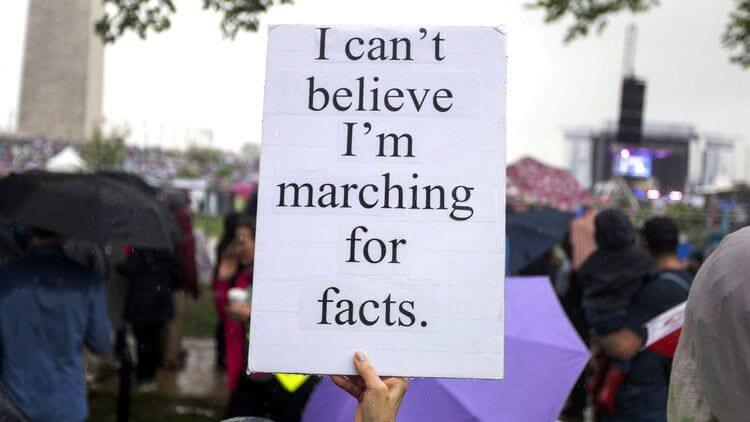
- During the 2017 election campaign, Jacinda Ardern stated that climate change was her generation’s “nuclear-free moment”.
- In an interview with the Spinoff in October last year, however, Ardern said she had “upgraded” that position because she did not see the same level of national unity around climate change that there had been around nuclear-free New Zealand.
- “What we’re doing on climate change – it is just that much harder because it’s a call to action for everyone.
- I’m hoping we can get to the place of having that same unified moment that we had around nuclear-free for climate change.”

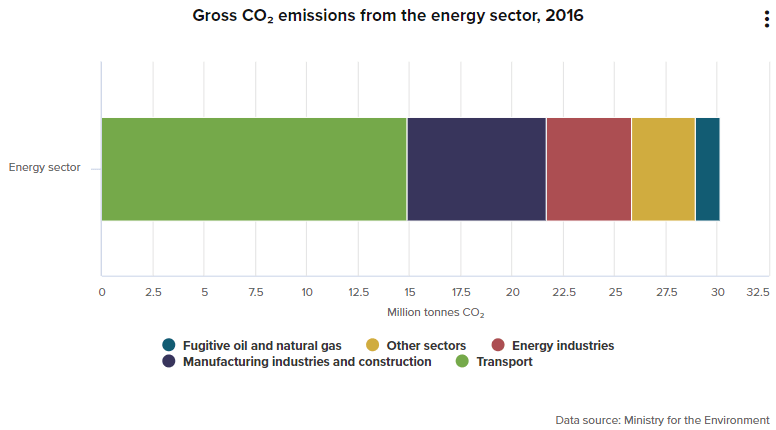
2016 - Gross CO2 emissions from the energy section
New Zealand’s share of global GHG emissions is small, but our gross emissions per person are high. New Zealand’s emissions mainly come from the combustion of fossil fuels that emit CO2 (carbon dioxide), and agriculture, which emits CH4 (methane) and N2O (nitrous oxide).
Data used may not include the latest emissions data, which can be found at New Zealand’s Greenhouse Gas Inventory.

Purpose is to Limit the global average temperature increase to 1.5° Celsius above pre-industrial levels
The Climate Change Response (Zero Carbon) Amendment Act 2019 provides a framework by which New Zealand can develop and implement clear and stable climate change policies that:
- contribute to the global effort under the Paris Agreement to limit the global average temperature increase to 1.5° Celsius above pre-industrial levels
- allow New Zealand to prepare for, and adapt to, the effects of climate change.
The changes do four key things.
They:
- set a new domestic greenhouse gas emissions reduction target for New Zealand to:
- reduce net emissions of all greenhouse gases (except biogenic methane) to zero by 2050
- reduce emissions of biogenic methane to 24–47 per cent below 2017 levels by 2050, including to 10 per cent below 2017 levels by 2030
- establish a system of emissions budgets to act as stepping stones towards the long-term target
- require the Government to develop and implement policies for climate change adaptation and mitigation
- establish a new, independent Climate Change Commission to provide expert advice and monitoring to help keep successive governments on track to meeting long-term goals. See the Climate Change Commission website.
The original proposal was for a separate piece of legislation called the Zero Carbon Bill to be passed into law. In May 2019, the Government decided to introduce it as an amendment to the Climate Change Response Act 2002. The objective was to ensure that all key climate legislation is within one Act.
Implement a transitional period till 2021
There will be a transitional period to 2021 to get the new provisions up and running.
- The Ministry for the Environment:
- has already begun work on the first National Climate Change Risk Assessment. Future Risk Assessments will be carried out by the Climate Change Commission.
- is also developing a provisional emissions budget for 2021–2025. This will provide an early sense of direction before the first three emissions budgets (for the emissions budget periods 2022–2025, 2026–2030 and 2031–2035) are recommended by the Climate Change Commission in early 2021, and set by the Government by the end of 2021.
- The NZ ETS will be an important tool in delivering emissions reductions and helping New Zealand achieve its emissions budgets and 2050 target. The provisional emissions budget for 2021–2025 will be used to inform the unit supply settings.
Responses to the Climate Change Response (Zero-Carbon) Amendment Act 2019
National Party said that while it welcomed the proposed amendments, they had “serious reservations about the expected rate of reduction for methane”. Simon Bridges said: “We are not convinced that the proposed 24-47% reduction for methane meets our test in terms of science, economic impact or global response.”
Greenpeace – The bill was also criticised by Greenpeace for having no way of enforcing its targets.
Forest & Bird was “disappointed” at what it saw as special treatment for agriculture.
Beef and Lamb New Zealand said the methane approach made unfair demands on farmers. “It’s unreasonable to ask farmers to be cooling the climate, as the government’s proposed targets would do, without expecting the rest of the economy to also do the same,” said a spokesperson.
“Beef + Lamb New Zealand is calling for a fair approach, where each gas is reduced based on its warming impact. An equitable approach requires carbon dioxide and nitrous oxide to go to net zero, and methane to be reduced and stabilised by between 10-22%.”
Some Facts

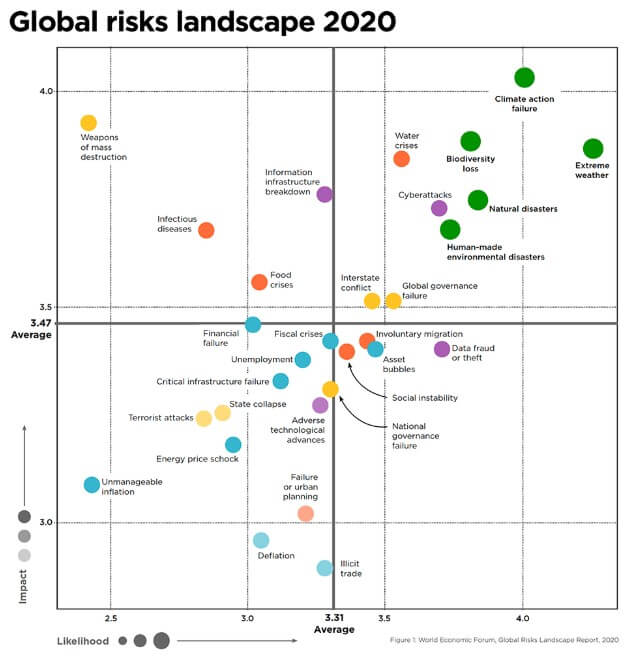
The Top 5 Risks are all environmentally related
- Extreme weather events with major damage to property, infrastructure and loss of human life
- Failure of climate-change mitigation and adaptation by governments and businesses.
- Human-made environmental damage and disasters, including environmental crime, such as oil spills, and radioactive contamination.
- Major biodiversity loss and ecosystem collapse (terrestrial or marine) with irreversible consequences for the environment, resulting in severely depleted resources for humankind as well as industries.
- Major natural disasters such as earthquakes, tsunamis, volcanic eruptions, and geomagnetic storms.
The report is produced by the World Economic Forum.
CO2, Climate Change and 400ppm
9 May 2013 – the concentration of CO2 in the earth’s atmosphere reached 400 ppm
An atmospheric concentration of CO2 > 350 parts per million is seen as unsafe
Insurance companies
Insurance companies use climate change evidence to mitigate their business risk
- A major insurance company is accusing dozens of localities in Illinois of failing to prepare for severe rains and flooding in lawsuits that are the first in what could be a wave of litigation over who should be liable for the possible costs of climate change.
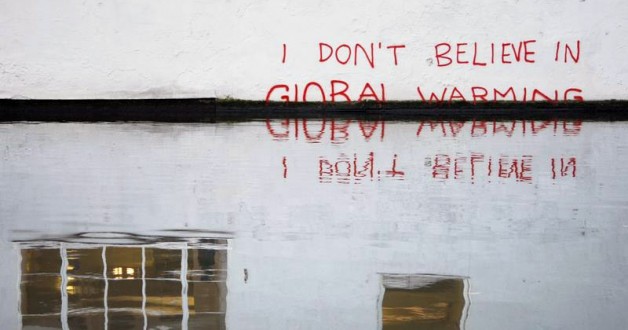
Severe weather events will become more frequent
Lloyds of London Thu 08 May 2014
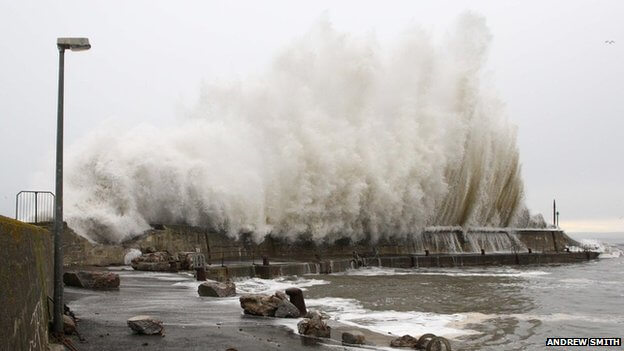
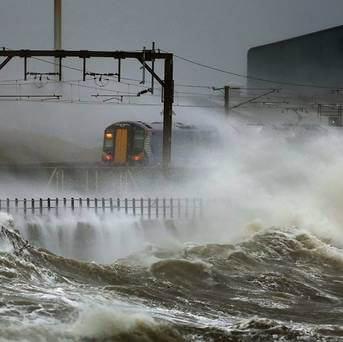
- Against a background of more frequent severe weather events, such as floods and windstorms, a new report from Lloyd’s highlights the importance of insurers ensuring that their catastrophe modeling tools keep pace with the effects of climate change.
- They quote the fifth assessment from the Intergovernmental Panel on Climate Change (IPCC), stresses that increasing magnitudes of warming is increasing the likelihood of severe and pervasive impacts that may be surprising or irreversible.
Storm surge is from rising sea levels is now the main damaging effect of hurricanes and storms
Dr Muir-Wood Chief Research Officer at Risk Management Solutions,
- …”Water is the new wind” in hurricane risk….in Hurricane Katrina more than 50% of losses were caused by flooding and storm surge. With hurricane Sandy, the majority of loss was also caused by storm surge, not wind…Looking to the 21st Century, he expects sea levels to rise which will further affect forecasting.
Business Initiatives
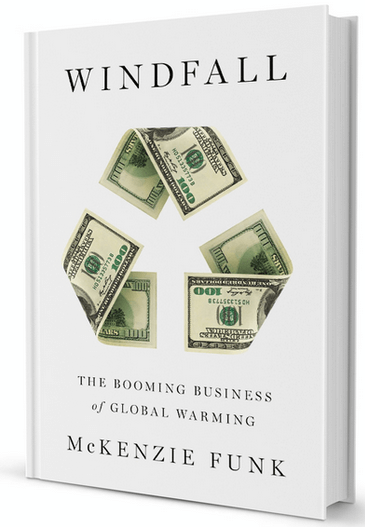
Many businesses are applying their understanding of climate change to make a living
- USA Today Posted 6/9/2008 10:20 – Weather derivatives becoming hot commodities
- Windfall: The Booming Business of Global Warming—
- Israeli company that sells snowmaking machines to Alpine ski resorts
- Wall Street investor who buys up Sudanese farm land
- Dutch companies selling their flood-fighting technology
- Seattle company that collects patents on geoengineering technologies
NZ GHG intensity

The greenhouse gas intensity of the economy has decreased 30 percent since 1990
- The ratio of total greenhouse gas emissions to real gross domestic product (GDP), which takes into account production and consumption levels, overall has fallen since 1990. This means fewer emissions are produced per unit of real GDP.
- Possible reasons include changes in the composition of the economy, for example the growth of the service sector, which produces relatively fewer greenhouse gases compared with other sectors.
Skeptics
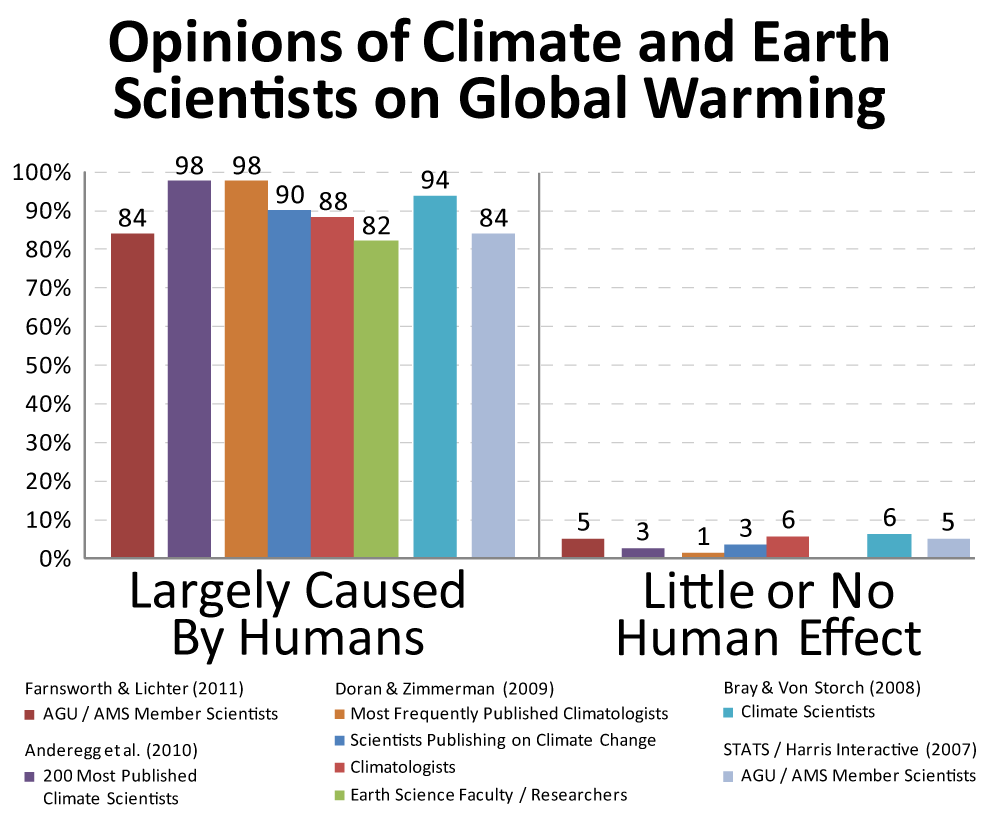
1. The climate change message is seen as too complex
2. Some people believe that climate change is not caused by human factors but part of a natural cycle
Expert credibility on climate change
- An extensive dataset of 1,372 climate researchers and their publication and citation data shows that
- 97–98%of the climate researchers most actively publishing in the field surveyed here support Anthropogenic Climate Change (ACC) outlined by the Intergovernmental Panel on Climate Change, and
- the relative climate expertise and scientific prominence of the researchers unconvinced of ACC are substantially below that of the convinced researchers
This link provides more references for scientific research supporting Anthropogenic Climate Change
3. There are other more pressing problems
4. Solutions are too complex
5. People prefer good news stories
Past elections policies

Information prepared for 2014 and 2017 general elections
2017 information from StatsNZ
From Stats NZ (2017)
New Zealand’s net greenhouse gas emissions have increased 54 percent since 1990
- New Zealand’s net greenhouse gas emissions increased 54 percent between 1990 and 2014. Total emissions increased 23 percent.
- A total of 24.4 million tonnes of carbon dioxide (CO2) equivalent was removed from the atmosphere in 2014, equivalent to 30 percent of New Zealand’s total greenhouse gas emissions that year. There has been a 16 percent decline in removals since 1990.
- Trees absorb carbon dioxide as they grow, and so remove it from the atmosphere. The increase in net emissions and decrease in removals are partly explained by the large quantity of forests planted in the early 1990s, which are now mature or have been harvested.
2014 information from StatsNZ

New Zealand’s net greenhouse gas emissions have increased 111 percent since 1990 – From Stats NZ (2014)
- New Zealand’s net greenhouse gas emissions increased 111 percent between 1990 and 2012. Total emissions increased 25 percent.
- A total of 26.6 million tonnes of carbon dioxide (CO2) equivalent was removed from the atmosphere in 2012, equivalent to 35 percent of New Zealand’s total greenhouse gas emissions that year. There has been a 29 percent decline in removals since 1990.
- Trees absorb carbon dioxide as they grow, and so remove it from the atmosphere. The increase in net emissions and decrease in removals are partly explained by the large quantity of forests planted in the early 1990s, which are now mature or have been harvested.
Making a difference

29 July 2009
- Deutsche Bank erected a seven-story sign outside Madison Square Garden in New York
- the counter shows that CO2 is being added to the atmosphere at the rate of 800 tons per second
- Unveiling the sign, Deutsche Bank officials said it was designed to highlight the crisis of global warming and the urgency of reducing CO2 emissions